
 Hello, dear reader! We’ve got a real treat for you with this post. Keep on reading and you’ll learn all about a hugely popular type of online slot that millions of players around the world can’t get enough of. We’re talking about Megaways slots. These are exciting, fast-paced and unpredictable slots where every time you spin the reels, there’s a different number of ways to win – there could even be over 100,000! If you’re intrigued and want to learn more about these slots, just keep reading.
Back in 2016, the provider Big Time Gaming released the very first Megaways slot: Bonanza. This mining-themed slot quickly became a big hit thanks to the Megaways feature it debuted. The way this feature works is straightforward: there’s a set number of reels (usually six) and whenever they spin, each one can have a random number of symbols on it from two to seven.
To win, you simply need to line up three or more matching symbols on adjacent reels, starting with the far left reel. Since the number of symbols on the reels changes with every spin, so too does the number of ways to win. Most Megaways slot have six reels with a maximum of seven symbols per reel. If all six reels have seven symbols on them, this gives you a huge 117,649 ways that winning combinations can be formed.
What’s more is that most Megaways slot use a special mechanic called Tumbling Reels or Ava-lanches. Thanks to this, whenever you win all of the winning symbols disappear from the reels. They’re then replaced by symbols of the same size dropping down from above, which can potentially form new winning combinations. If there’s at least one new win, the winning symbols vanish again and you get more symbols dropping down to fill in gaps. There’s no limit to how many consecutive wins you can get from this feature.
Bonanza and other Megaways slots from Big Time Gaming have been very successful at online ca-sinos. Their success has resulted in several other major providers releasing their own Megaways slots – they’re allowed to use the Megaways system by licensing it from Big Time Gaming.
Right now, there are dozens of online slots that use the Megaways feature. They come in a broad range of themes, are created by several well-respected providers and the have exciting special fea-tures and bonus rounds.
One of the newest ones is Gonzo’s Quest Megaways. Developed by Red Tiger, it’s an enhanced version of the hugely popular Gonzo’s Quest slot from NetEnt and has the same Mayan theme as the original. One of its best features is the Avalanche Multiplier. The more consecutive wins you get, the bigger the multiplier gets – it can reach as high as x5.
Who Wants To Be A Millionaire? Megaways is themed to the hit TV game show where contestants answer questions to win cash prizes and hopefully become a millionaire. As well as featuring Mega-ways, this entertaining slot has a free spins round where you can use your spins or take a gamble and earn a lot more. The show’s famous lifelines come into play here and can help you walk away with more free spins to use.
Primal Megaways from Blueprint is a Megaways slot themed to prehistoric times. Its symbols include mammoths and sabre tooth tigers, and there’s a free spins round that comes with multiplier wilds. The more scatters you land, the more spins you’ll earn and the bigger the multipliers will be. If you don’t win at least 10x your stake, the free spins round will play again and keep rolling over until you do.
Another slot worth mentioning is Fishin’ Frenzy Megaways, which was also developed by Blueprint. It only has a maximum of five symbols per reel, so the highest number of ways to win you can get is 15,625 – this isn’t as high as other Megaways slots, but it’s still better than regular online slots. There’s a free spins round where all fish symbols come with cash values. If the fisherman lands, you’ll win all these prizes. If there’s more than one fisherman, your winnings are multiplied by the number of fishermen there are.
We’ve only just begun scratching the surface – there are loads of other brilliant Megaways slots wait-ing to be played at online casinos. Have fun playing these innovative and engaging games. With thousands, tens of thousands or even hundreds of thousands of ways to win, you could end up earn-ing some decent payouts when you give these slots a go.
 Roulette is a classic – that much is an indisputable fact. First introduced in the 18th century in France, the game quickly spread across the world, though while very minor changes have been made to it, especially early on in its life, its core and essential rules have always remained the same. You bet on a number, then you spin the wheel and see if you get lucky! While the good old classic roulette works for most people, the modern, 21st century, easily distracted and Internet-obsessed individual requires something a bit more different. I mean, the modern casino player is the kind of person who demands hundreds of different slots, because just a handful are apparently not enough for our modern, hard-to-entertain minds. But it’s easy to make slots, since there’s plenty of stuff you can change, even within the strict confines of what can legally be defined as a slot. But when it comes to roulette, the limitations suddenly become near insurmountable.
That’s really the reason why you don’t see a billion versions of roulette – when people go online to play that game, they expect a very particular set of rules and circumstances, which is why developers can’t afford to mess around with the formula too much. As a result, only a few variations of roulette exist, the most famous of which being “Deal or No Deal Roulette”, based on the world-famous TV show titled, you guessed it, “Deal or No Deal” (which is an oddly uncreative title when I think about it, even for game show standards). In the show, contestants get to pick a box out of a set number (usually 22) and then open some of the boxes they didn’t pick. Each box contains sums of money, and the goal of the contestant is to open the boxes containing the small sums, thus increasing the probability of one of the big sums being in his own box. From time to time, the contestant will receive calls from the Banker who will offer them a deal – to sell the box they have with them, and the prize lying within (a prize they don’t know) in exchange for a cash sum (usually the average of all unopened boxes, so the better the player is doing, the higher the Banker’s deal is – but the moment they screw up and start eliminating the bigger sums, the offer plummets). The contestant gets the offer numerous times throughout their game, and their choice is whether to keep playing and eventually open the box they picked or give it up in exchange for the certainty of the cash offer.
“Deal or No Deal Roulette”, which is playable in most online roulette sites listed here, operates on pretty much the exact same rules. While during most of the game you play normal roulette, with all of its normal rules and regulations, there’s a second wheel which gives you the chance to enter the “Deal or No Deal” round in which you literally play the same game as shown on TV. While this bonus round is rather rare, it does give you the chance to earn some free cash without really risking much. So to answer the titular question, yes, “Deal or No Deal Roulette” does, in fact, increase your odds. While you probably won’t activate the round the first or even the second time you play (I know I didn’t), keep at it and soon enough you’ll get a shot at those big, red boxes!
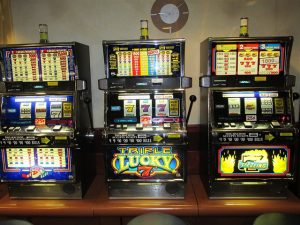 Welcome back, dear reader! Now those of you who have been following this blog up to now will already have a good idea of which sort of slots you should be looking out for. You’ve also seen my recommendations for slots with the best odds. Yet there are those of us that play online slot machines solely in the hope of winning big, life changing sums of money. If that sounds like you, then the way forward is to play progressive jackpot slots. These types of games have a jackpot that builds and builds, and once cracked, can pay out prizes worth millions of pounds. If that sounds like what you’re looking for, then check out these top 3 progressive jackpot slots that can make you a millionaire. And if any of these games tickle your fancy, you will find some of the best casinos that offer them at www.realmoneyslotmachines.co.uk
NetEnt’s Nordic themed video slot has created its fair share of millionaires. In fact, just a few months ago, it paid out around £1.4 million to a lucky Swedish player. Yet this is just the tip of the iceberg, given it has paid out jackpots in excess of £6 million on multiple occasions. These players cracked the Mega jackpot, yet there are actually 3 different jackpot prizes that are up for grabs in the game. For your shot at scooping the jackpot, you need to line up 3 bonus symbols, which will launch the bonus game. Here, you will see a wall of shields, which you hit to reveal various prizes using Thor’s mighty hammer. Reveal 3 matching jackpot symbols, and you could be the next Hall of Gods millionaire.
The name of this slot says it all; it has created tons of millionaires and is the biggest paying jackpot slot from NetEnt. In fact, until very recently, Mega Fortune held the world record for the highest payout from an online slot, having rewarded a lucky player from Finland with a massive € 17.9 million prize. The luxury themed slot offers 3 jackpots, Rapid, Major and Mega, which can be won during the jackpot bonus game. The bonus round is triggered by 3 bonus symbols, and it consists of a spin the wheel game. With every spin, you can move one step closer to the centre, and the biggest, life changing prize.
Known as the “millionaire maker”, the fan favourite Mega Moolah has created more millionaires than any other online slot. The best part? The jackpot is always guaranteed to be a minimum of £1 million. Similar to Mega Fortune, there is a spin the wheel bonus round in which you can win the jackpot. There are 4 up for grabs, and with every successful spin of the wheel, you will progress towards a bigger prize. The bonus game is triggered randomly as you play, and the odds of entering the jackpot game increase with your bet size. However, even playing with the lowest stakes can be hugely rewarding. Just ask Jon Heywood! The British soldier recently scooped a jaw dropping £13.2 million from just a 25p spin, bagging him not only an enormous cash prize, but also a new world record.
Hello again, dear reader! Ready for more knowledge on how you can win from slots? Well, last time, we discussed in depth what to look for in a slot and I still stand by that article – it’s nice and detailed while being concise and informative, or so I’d like to think. I don’t know, maybe I just suck and am delusional about the quality of my own writing. Anyway, that doesn’t matter, you’re stuck with me! The point I was trying to make is that, while my guidelines will give you a pretty good idea of what to look for after you’ve already found a slot, they’re next to useless if you don’t already have one in mind. So I said “Screw it, let’s just give the people a few recommendations!” Now, keep in mind that the slots I’m going to list below aren’t the Holy Grail – they’re not your final destination, and you should always be trying to find new ones that fit the previous criteria. What they are is a starting point, and an example of the kind of quality that you should be looking for. Does that make sense? Alright, let’s not waste any more time and get down to business!
 Definitely one of the best slots that I can possibly recommend. Based on that movie nobody watched which made a meager $1.5 billion dollars or whatever, “The Avengers” is literally everything you could possibly want in a slot. As you might remember from my article, we’re looking for 3 things – a good RTP, popularity and a big jackpot. Well, “The Avengers” has got it all and then some! It’s one of the most popular slots in the UK by a wide margin, and it’s not hard to see why considering that it’s got an RTP of 95% – pretty good for a slot packed with so many features! Indeed, there’s plenty of bonus games and free spins that you can unlock (and the best part is that once you activate free spins they can go on indefinitely until you get a symbol that ends them), and on top of it, the slot also has the famous Marvel progressive jackpot!
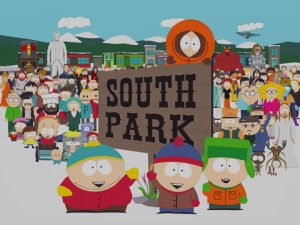 Ah, “South Park” – the show that for almost 20 years now has continuously convinced us that there’s no such thing as humor that’s too harsh! Honestly, it was only a matter of time before it attacked the world of slots, and it did so with style and graced that are matched by very few! Developed by the wonderful NetEnt (whose mission in life is to provide players with fun slots that pay out lots), “South Park” has an RTP of 96.7% and oh, so many bonus games! It honestly feels like I was stumbling onto a bonus round every few minutes while playing this game! It’s insane in the best possible way! While there isn’t a progressive jackpot here, which is definitely the game’s biggest draw, you can still win up to £70,000 in one go if you get lucky.
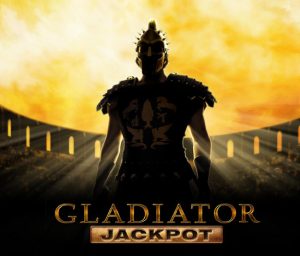 While Russell Crowe’s career has had its ups and downs (mostly downs lately, unfortunately), no one can deny that his biggest hit, “Gladiator”, is still an amazing ride all those years later. So it really should come as no surprise that its slot adaptation is of similar quality! While the RTP is a bit on the low side (94%), it more than makes up for it with its huge progressive jackpot, numerous bonus games and frequent winnings! And the best part is that “Gladiator” offers a relatively unique feature (it’s not the only slot that uses it, but the ones that do are few and far in between) which is guaranteed to make even the most hardcore gambler tingle, namely – you can bet any of your winnings on the flip of a coin. If you win, your wins are doubled, if you lose, you end up with nothing from your spin! Pretty great combo of features if you ask me!
 Greetings, salutations and aloha to you, my dear reader! I’m so happy you could join me here for a bit! If you’re here, that means you want to unlock the secrets behind unlocking the true potential of slots! Good, good! You’ve come to the right place! This way, please! Have a seat! May I offer you a cup of coffee, or maybe some ice tea? No? You just want to know about slots? Well, I should probably inform you that we’ll mostly be talking about online slots here – while there are a few tricks to beating physical slots, they’re not nearly enough to dedicate an entire article to! So, let’s not waste any more time and dive straight into the world of online slots, to try and see what we should be looking for when selecting one!
This is one of the most important parts! For those of you who don’t know, RTP means “Return To Player Percentage”… Which, in simple terms, is exactly how much of the money invested in a slot gets dispensed back to the players. Slots do need to make profit, after all, and the RTP is a way to keep both the slot provider and the player happy. Let’s say a slot has an RTP of 95% – that means that of every £100 that the players spend on the slot, £5 will be stored into it and taken by the people who have created that slot, while the other £95 will be randomly dispersed back to the players. Naturally, the higher the RTP is, the better your chances of winning are, so don’t go for anything below 95%!
As mentioned above, slots can only give out the money that has been invested into them… So if nobody’s playing a slot, then there’s no money to be dispersed back to the players, right? While a slot may offer a lucrative RTP of, say, 99.9%, if it’s stuck on the very last page of the online casino and nobody has ever heard about it, then it’s not just magically going to dispense money – if anything, it’s only going to dispense your money back to you, but at a loss! Try to look for the more notable, big-name slots, usually the ones that are featured prominently on the front page of your online casino of choice or are based on famous properties, such as “Game of Thrones” or “The Avengers”.
Jackpots are key here, people! If you want to win big from slots, you need either a good bonus game or a big jackpot. One is very easy to spot from the get go while the other is not, so let’s focus on the thing which is easy to spot for now, shall we? You need a jackpot that is not only huge (£500,000 or more is preferable), but also relatively easy to get (some slots place limits on when you can win the slot, such as “you need to play for the maximum bet on all paylines” – try to ignore those). While it might take a bit of searching to find a slot that covers all three of these conditions, and that is still not a guarantee that you’re going to win anything at all (remember – slots are still a game of chance, first and foremost), doing so will bring you one step closer to that sweet, sweet victory!
We all know that blackjack can be beaten, right? Books have been written on the subject of card counting, entire movies have been made about intelligent men and women who are able to beat the system and walk off with absurdly large amounts of cash because they know exactly how to play the game. Roulette can also be beaten – we all remember (or at least should) that scene from “Casablanca” where Rick helps out a Bulgarian couple get their passports in order through the use of his roulette table at his casino. Hell, even bingo can be beaten – we’ve seen it time and time again! No, I don’t have a movie scene in mind for this one, but I guess the titular “Bad Grandpa” came closer than any of us ever will when it comes to beating bingo.
But did you know that slots can also be beaten? Yep, you heard me right – something as random and unpredictable, something created by design to rob you of your savings and addict you into putting every single cent into it, can be beaten into submission harder than a masochist at a BDSM party! Now, don’t get me wrong, beating slots is way harder than beating blackjack is (and that’s saying something), and there’s still a considerable amount of chance in there, but it is, regardless, entirely possible. For example, did you know that, in physical casinos, the slots placed towards the back of the casino are usually programmed to give higher payouts than the ones placed front and center? Just one little trick like that won’t possibly earn you the jackpot, but stick with me here and I’ll teach you a lot more!
Recent Comments